Accomplishments
- Reconstruction Improvements
Bonus
- New Examples
Converting point clouds and forming them into cohesive 3D models must be sophisticated enough to handle many edge cases. This week I was able to tackle some of these edge cases, as well as receive the meaningful opportunity to capture three new examples valuable for testing the end-to-end workflow.
Improved 3D Reconstruction
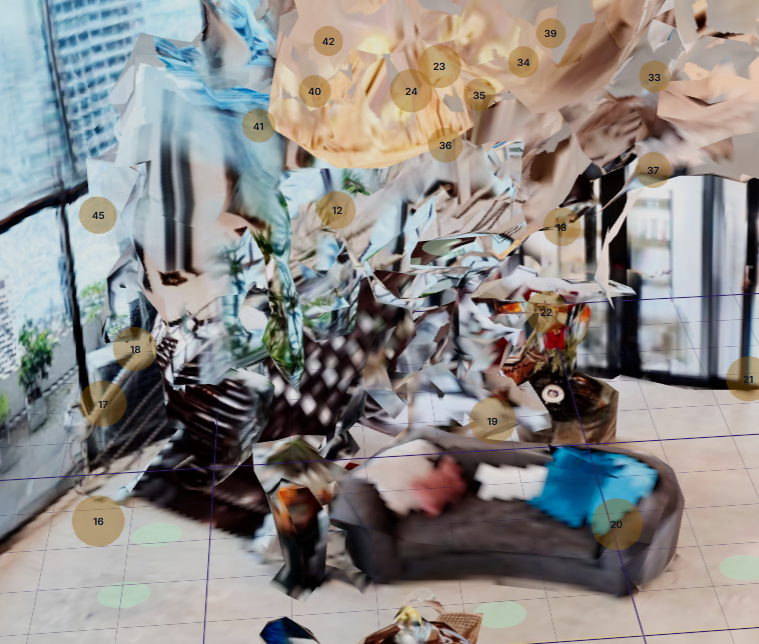
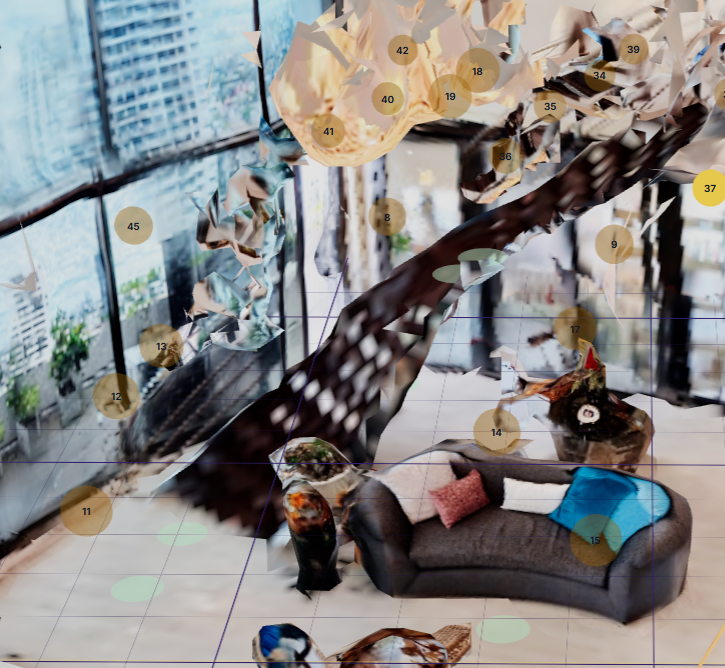
This week I tackled an issue where, during one stage of reconstruction, floating blobs would often form in direct contradiction to the nearby camera. This can be clearly seen around the staircase in Supalai place. Point clouds and cameras at the ground level and on the staircase express a large amount of empty space. However, in the reconstruction, a large canopy would appear over the staircase. A variety of causes led to this. For one, it appears that the mathematical process which occurred over this field found a small number of stray points which remained and fused them into the final mesh, adding points to connect them. These stray points often came from missed votes in regions too close to the camera. After updating these processes, cameras across the scene better expressed their free space and reduced floating artifacts.
Bonus: Hotel Examples
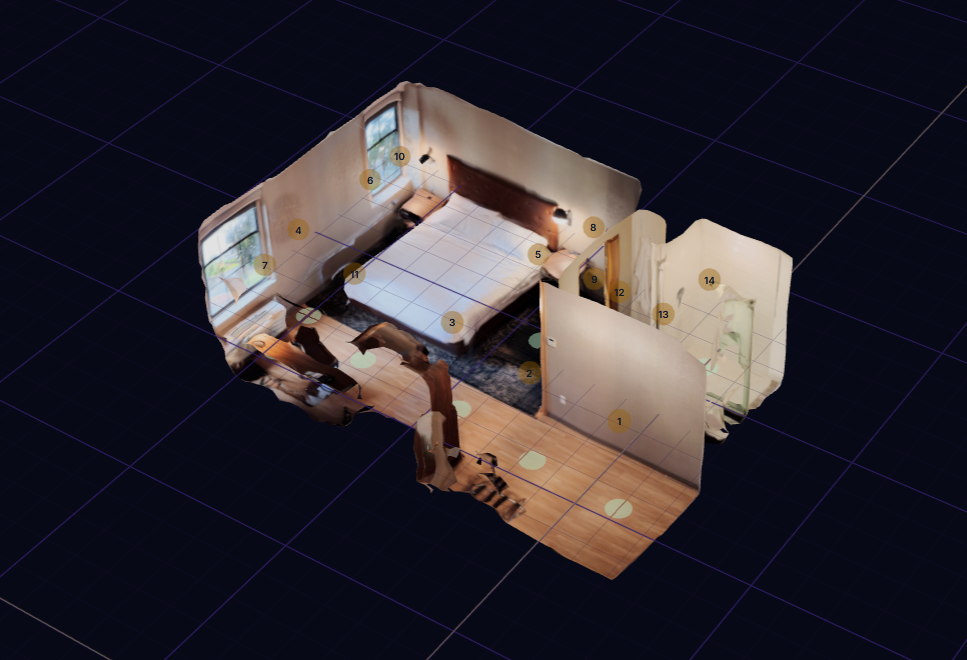
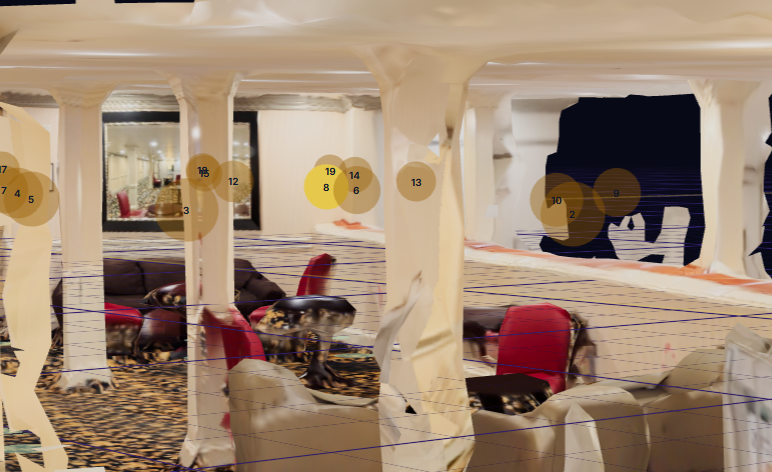
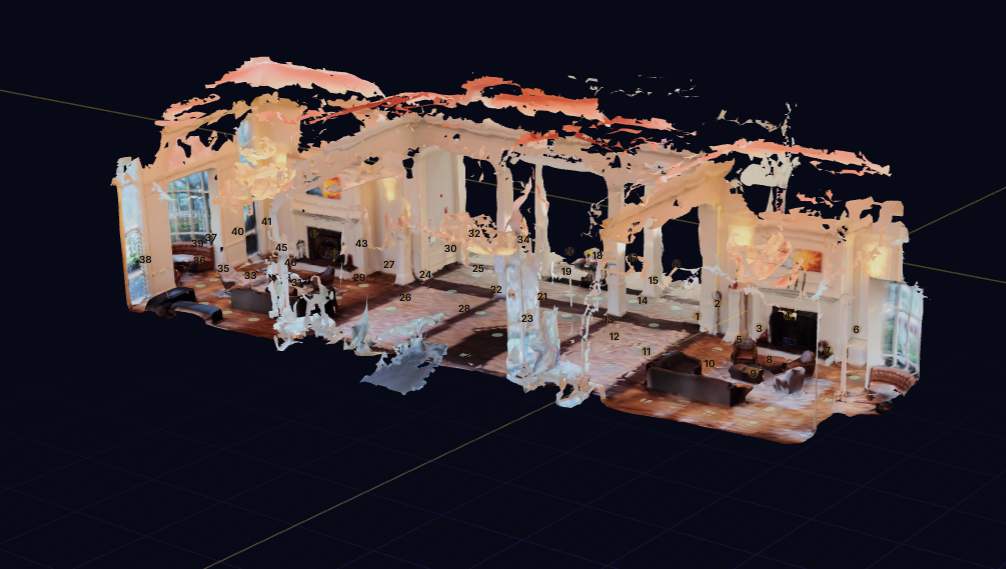
A recent stay at a local hotel began with an opportunity to capture the accommodation. This acted as a great opportunity to test the functionality of my mobile application on-site. Multiple test runs were performed. During each, I gained better insight into how my mobile app could be used on the job and the human factors it could better support. This led to a variety of new planned features, like changing the connected camera even after capture or inference.
I admired the décor and common area and, upon checkout, requested permission to capture some photos. To my elation, it was granted. I eagerly began scanning the lobby and balcony. This allowed me to take the mobile app beyond user testing and into stress testing. It did well handling dozens of photos and consistently displayed the updated point cloud.
This also allowed for an opportunity to test its adaptability. After scanning a small section, a staff member arrived for daily cleaning. I paused the project and moved on to another area. Later, when the cleaning had commenced, I reopened the project, eager to see if I could pick up where I left off. With the lighting and outdoors visually similar, and the architecture unchanged, I was able to. This was incredible and informative of the adaptability of the tool I had not yet considered.
This experience also offered an opportunity to manage a dynamic environment. People entered and exited the lobby consistently. This was a great opportunity to use my cutout tool to mask and remove people from images. It was also a good opportunity to engage with others. Upon completion, a group of guests expressed interest in my activity. Our discussion appeared to excite and intrigue them, leaving me with smiles and best wishes.
I am so grateful to the hotel for the accommodation and opportunity to practice and test my service in a live and well-designed environment.
Summary:
Focusing on reconstruction comes with challenge and patience. Many interconnected steps combine to form the final result, and changes to one area open reactions in the next. Balancing these choices and steps in a way that delivers more visually accurate results over a range of examples is difficult and rewarding. I am grateful for the progress made this week and the exciting opportunity to test my tool and gather examples to even further improve my research.